
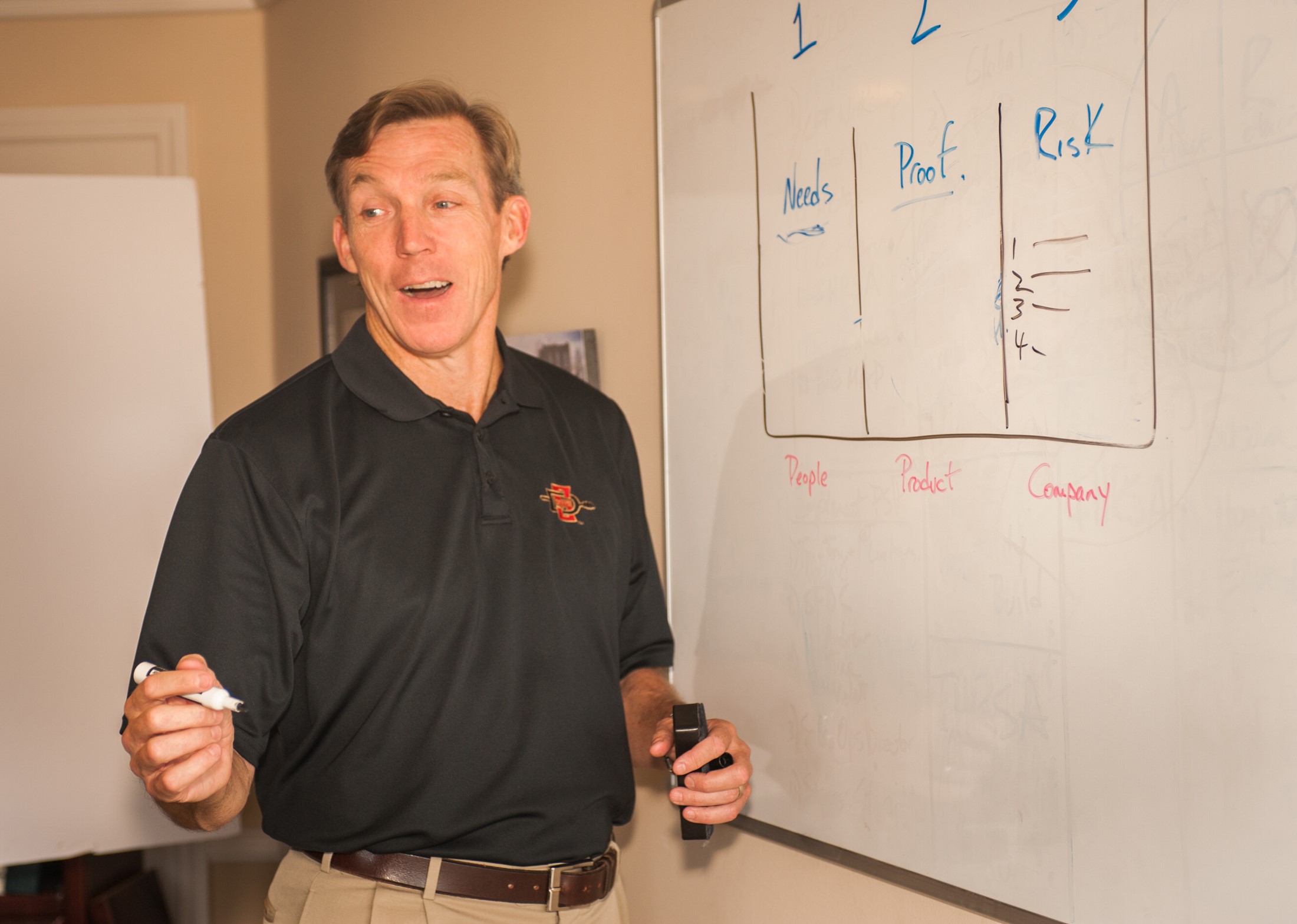
10_year_john


This year, Flannery Sales Systems (FSS) is celebrating a decade in business. We are proud and humbled to hit this milestone, and want to take an opportunity to recognize that this celebration comes from the success that our customers have realized through our combined efforts.

In 2004, my wife Septembre and I were in a conversation when I raised the idea of what I would like to do next in my career, as the company that I was contracting for in start-up mode was sputtering along with limited success. After describing how passionate I was about going back into field Sales, and how helping others to improve their success in Sales lead me to the Sales Training business, she simply said “then go do it.”  So I did.

Flash forward to 10.5 years later, and Septembre, (who comes along on an international trip every few years for a well-deserved break) and I are sitting in the airport in Shanghai, getting ready to fly to Tokyo to continue a series of 7 Workshops conducted over a 6 week period in four cities. How did this all happen? What a dream, an absolute decade of ups and downs and in-betweens that come with founding, building and running a business.

And like any other business, it starts with customers. But customers don’t just show up in a business to business marketplace with an average sales cycle of 6 to 9 months.  On March 1 of 2005 the business opened, and in 14 months, FSS ramped up to a full calendar of new customers, and a travel schedule that kept me on the road for 20-25 weeks per year. In August of year number 2 (2006), we landed what turned out to be a six year agreement with a large multi-national company in the scientific distribution business.

The key to getting great customers is having a strong team, and I have been blessed with both. Susan Wilcox has been the anchor on our team for years. Susan has an innate ability to coach, and to create content that reflects just what the customer needs to succeed. Many others have helped working in the business, to keep Marketing, Finance, Operations, Legal, IT and Admin afloat. Lauren Mills, Don Levy, Jo Burley, John Zimmerer, Tiffani Ross, Mindy Thomas, Kyle Kodra, Melissa Clemens and Malinee Kukkonen have all been valued contributors. Tom Martin from Strategy2Revenue has been the closest trusted advisor I have known in my 28 year career. I have also been fortunate enough to work with, learn from and get to know Gerhard Gschwandtner, CEO and Founder of Selling Power magazine. And finally, my brother Dick has been a huge help, especially in the formative years and advising me in many business and career-family- balance related topics.

To see salespeople improve, and to help their managers to Coach them effectively are the most rewarding parts of our work. We have watched teams improve results at the bottom of the 2009 downturn, and have helped B and C sellers to grow their skills to new heights. The greatest compliment we receive is to be re-hired when leaders move from one company to another; this has happened several times.  FSS has worked in 14 different countries representing attendees who speak 19 different languages. We have benefitted by learning about our customer’s customers, and how the cultural differences and language subtleties play an important role in their ability to sell effectively.

There is nothing left to say but Thank You. To those who believe in the team and me, I am humbled beyond words. For my valuable customers, your trust is something that we take very seriously and reciprocate with a commitment to help you to exceed. That conversation in 2004 with my beautiful wife catapulted me into a dream of a career, one that I don’t call work because I enjoy it so much. I am forever grateful.

 

tom_martin

*A guest article by FSS colleague and friend Tom Martin.


What is the best approach to coaching sales reps to improve their selling skills?  Why of course the answer is … it depends!

To help guide better managers on how to coach their teams I’ll spell out a few points to consider and include a simple framework that can be adapted for use in many situations.

Similar to a sales conversation, it is always a good idea to understand the current environment,  the problems caused by it, and your desired future state.  Following are some items to consider.

What style learners do you have?  The generation of the seller (GenX, Milennial, etc) is often used as a proxy for guidance. Some members of your team will learn best by doing role plays, others will need to receive “just in time” coaching in the field, immediately following a sales call.

As I have heard John Flannery say in a workshop, “People are best convinced by reasons they themselves discover.”   Similar to client conversations, coaching conversations are usually best when they include great questions to help a seller understand where they need to change their behaviors.

Microlearning is a popular topic in the Training & Development world.  Selling skills can’t typically be trained and coached in a single interaction. Instead, consider how you can provide snippets of coaching to help your sellers learn.  Include some topics in a weekly team call; send weekly tips that reinforce concepts learned in the last live training session; etc.

Coach to what is most important to your company.  Consider the overall business objectives or key initiatives for the company to guide your coaching.  Is “decreasing ramp time of new hires” a top 3 item?  If so focus your new hire coaching on the specific skills and behaviors needed to be productive members of your sales society.

These ideas, and the hundreds of others that can help, can get overwhelming and lead to Random Acts of Coaching.  To help drive some order out of the chaos the best approach is typically to follow a coaching system that can help organize your thoughts. Find a system that works for you and violently implement it!

Here are some key elements in a relatively simple system that I use:

  • Behaviors
  • Model
  • Approach
  • Cadence

Behaviors: Focus your coaching on the behaviors that support the Skills you want to put in place.   For example “asking great discovery questions” is a behavior that supports selling skills like prospecting, negotiating, and closing.

Model: When coaching behaviors consider the matrix of whether they are capable of doing it, and do they want to.  Sometimes called Commitment & Competence, or often Skill & Will in coaching parlance.

Approach:  Screaming at the scoreboard doesn’t yield great results.  Instead you should ask people how they think they should be doing things, potentially show them a better way, observe them trying to do it, and then give them feedback (Ask-Show-Observe-Feedback).

Cadence: With so many tasks to focus on, the best coaches have a regular rhythm around what and when they will be coaching (and doing the rest of their management duties).

For additional insights on coaching be sure to read other posts by Flannery Sales Systems like Are You a Great Sales Coach?

Sales Process ELIA Riga Apr 25 2014 - Copy


John is pleased to be invited back to work with ELIA’s member companies to help improve their selling skills and ultimately their sales results.

How you begin a sales opportunity is just as important as closing the deal. Although the excitement of negotiating the final agreement gets much of the attention in sales, how you behave throughout the sales cycle will play a large part in the successful completion of winning new revenue for your company.

Please click on the link here to learn more about the session and how to register. For any specific questions you can email John at john@drive-revenue.com.

We hope to see you in Krakow September 30th and October 1st 2015.


Click the arrow above to view John in Tokyo, Japan and hear what he has to say about our upcoming newsletter, including our 10 Year Anniversary, Marketing Qualified Leads and Coaching Skills.