
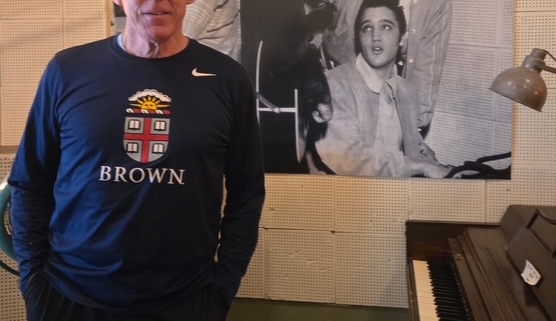
We’re kicking off a new customer Workshop just outside Memphis from February 22–27.

This is my first time in a city that has shaped modern music. It’s where The Blues became the backbone of Rock and Roll. The fundamentals were built here.

Home of Elvis Presley. I’ll stop by Graceland to pay respects.

The Memphis Blues crossed the Atlantic and helped shape The Rolling Stones (my favorite). Roots → refinement → global impact.

We take the fundamentals of Sales Process and Coaching, the structure, skills and execution turn it into something scalable, repeatable, and powerful.

Memphis proves it: The basics matter. Execution makes it legendary.

If you’re nearby that week, let’s connect. Time to make a little rock and roll of our own.

Last week I attended (virtually, on campus) in the Memorial at Brown University following the tragic events of December 13. Dozens of lives have been permanently altered, and the issue at the core of this pandemic goes unchanged. What are YOU going to do about it?

It’s the first thought that most sellers have when they initially engage with a prospect. Conscious and subconscious ideas drift in to try and size up this person, analyze the words they use (is this a Decision Maker?) and determine if this “hot lead” will ever make it into my Revenue Pipeline for a review with my boss (ugh).

This is a tough question to ask someone you just met, although I will include it in a book I have in DRAFT mode called “Shit I’d Love to Say to Customers”. And, if the fantasy of this scenario plays out, and the prospect says “Yes, I am going to buy from you (trumpets sound)”, you then get to ask the most logical, follow-on, seller-centric question ever… WHEN?

Don’t forget to explain to this newly minted, damn-near-customer that you must give your Manager an update on how the call went (GREAT is always the answer) and what the next step is (closing, of course).

A one-step sales process. Meet, Ask the Top Two Questions and Close. Damn, that was easy.

If this works, please call me immediately. We have a book to write, a speaking tour to schedule and umpteen dozens of Workshops to deliver. The good news- the training sessions will be short.

When I’m retained by clients to help their sales team, the first thing I do is to ask to interview their top performers. My purpose is to decode their selling DNA and identify the markers that make them successful.  

Invariably, effective salespeople sell value, not solutions or services. They recognize that it’s the ‘why’ that resonates with buyers – the business value. Equally revealing is illustrating how today’s problems impact the overall bottom line. But selling value and the total cost of problems facing a customer is where many sales teams run into trouble.  

Pinpointing and helping customers articulate these positions may not come naturally but it’s a necessary practice if you want to meet or beat your goals. Top performers use the following three tactics to draw out the answers to business value and the cost of challenges.  

  1. Get to the cost of today’s problem. Buyers face a number of problems and challenges.  Great salespeople help buyers define – in totality – all of the costs these problems bring. While costs may be non-monetary, such as frustration or low morale, the numbers that hit the bottom line are those that are heard by every person involved in the buying decision. Great sellers shape and frame conversations around the costs of the buyer’s problems. This is especially important if the solution’s value comes with a higher price tag. Early conversations around costs will help sell more and ensure that the necessary margins are hit in the end. 
  2. Tell stories. Stories help buyers discover for themselves the problems that they are facing and the solutions they need. High achievers have several stories at the ready that they can tailor and share based on the buyer’s situation or desired outcome. When the conversation lulls and the buyer is unable to explain their problem, share a story! Start by framing who the experience is about. Then identify the problem, turning point and resolution. Buyers who hear successes and failures of industry peers become more willing to share details about themselves and have an easier time finding their voice. Stories not only get to problems, they also help describe how others use and derive business value from your products. Stories have purpose and great salespeople use them again and again. 
  3. Summarize conversations in writing. This is a tactic that all sellers tell me they do, but few do it well. I sell my services to many companies in different industries. I constantly refer to follow-up emails I’ve written after conversations. The emails sum up problems a client is facing and the associated costs, the solutions we discussed and their value, and of course, proposed next steps. These emails help the customer and I keep the focus on the problems we are trying to solve. Top performers don’t rely on memory. They simplify, write the plan down, share it with the customer and allow the customer to give feedback. 

If you want to sell the business value your products bring, incorporate these techniques and the process will be habit in no time.