
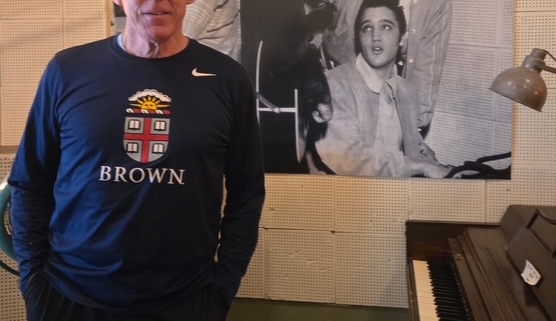
We’re kicking off a new customer Workshop just outside Memphis from February 22–27.
This is my first time in a city that has shaped modern music. It’s where The Blues became the backbone of Rock and Roll. The fundamentals were built here.
Home of Elvis Presley. I’ll stop by Graceland to pay respects.
The Memphis Blues crossed the Atlantic and helped shape The Rolling Stones (my favorite). Roots → refinement → global impact.
We take the fundamentals of Sales Process and Coaching, the structure, skills and execution turn it into something scalable, repeatable, and powerful.
Memphis proves it: The basics matter. Execution makes it legendary.
If you’re nearby that week, let’s connect. Time to make a little rock and roll of our own.
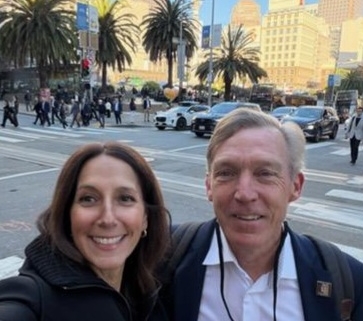
Each year at the JPMorgan Healthcare Conference, I build additional perspective on the Life Sciences and Biotech industries that we have participated in for 21 years. The range of people I meet, the types of companies they serve or represent, and the breadth of nationalities present make this the most diverse gathering we attend.
In just three days, I cross paths with people from 7 different countries, and leaders and representatives from more than 40 companies engage in dialogue, both formal and informal. These conversations share perspectives that spark curiosity and keep the fire lit.
On my way out of the final reception, I find myself in conversation with a woman from Moscow—a PhD/MD and Managing Director of a global investment fund. She asks me, “What is the key for you to get the most from these events?”
I answer without hesitation: listen.

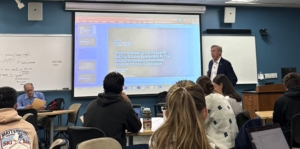 It was a pleasure to return to Brown University recently to guest lecture once again for the class Sales and Selling Leadership in the Entrepreneurial Environment, taught by Professor Howard Anderson. Last year, we focused on how Sales Process drives the tactical execution of a company’s commercial strategy. This year, the discussion evolved. We dug deeper into how entrepreneurs can scale their ideas through process, discipline, and customer engagement.
It was especially meaningful to have my daughter, Hannah, in the class, now a Senior studying Economics and playing on Brown’s volleyball team. Along with her was teammate and friend, Jessie Golden. Having them in the audience brought a special sense of pride and perspective.
Sales Process as a Foundation for Growth
Professor Anderson cites that startups only have two problems: sales and all else. That premise set the stage for an engaging conversation about how entrepreneurs can build a repeatable sales process that drives predictable results. We explored the idea that process creates objectivity and clarity. It allows founders to focus their creativity where it matters most: solving customer problems.
I asked the students to reflect on three simple but powerful questions when taking a product or service to market:
- Who are the Key Players (KP) you would focus on in B2B Sales?
- What business objectives are the KP measured by?
- What capabilities (services, ideas, etc.) do you bring that help them achieve the objectives?
These are the same principles we apply every day at Flannery Sales Systems (FSS) with clients ranging from high-growth startups to established enterprises. The fundamentals don’t change; only the context does.
Closing Reflections
Speaking at Brown again was deeply rewarding, as it pushed me into a different framework in preparation and delivery. The students’ interaction, questions, and ideas reinforced how critical it is for young leaders to understand that selling, done well, is about creating value and earning trust.
Sales Process Effectiveness Survey
Click on THIS LINK TO BEGIN.
This quick survey is designed to help you take an objective look at how effectively your Commercial Team uses your Sales Process (SP).
Rate each of the seven statements below on a scale of 1 to 10, where 10 represents consistently applied and highly effective.
Once you’ve completed the assessment, we will:
a) Consolidate everyone’s results anonymously into a group ranking
b) Share practical ideas to improve performance based on your input
c) Provide sample tools you can use to strengthen outcomes immediately
Ready? Let’s begin.
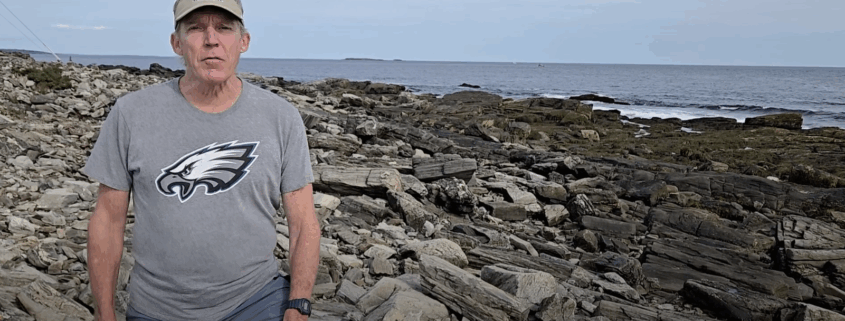
John traveled to Portland, Maine where he may have eaten too many lobster rolls but that won’t stop him from helping you in improving your selling skills.
Every professional role requires initial and ongoing training. Doctors and lawyers have to renew their licenses annually. I am certainly glad the pilots we had were trained. How prepared are your sellers for buying gauntlets? Click on the video to hear more.

Travel has always been a core part of my life. The excitement, mystery, hassle, fun, and occasional confusion it brings fuels my creativity, propels me toward the next destination, and makes returning to my home in San Diego even more special.
As one of my favorite storyteller, writer, and chef Anthony Bourdain once said:
“Travel is about the gorgeous feeling of teetering in the unknown.”
My friend John Spence knows this feeling well. With more than 30 years in the travel industry, John and his wife, Emma, have crafted experiences for travelers across the globe. Over the past decade, they built their own successful agency, sold it to a larger firm, spent several years within that organization, and then took a well-earned sabbatical. They went traveling, of course.
Now, they’re back and have launched The Spence Connection (TSC). Their approach is simple but powerful: assemble the very best talent, resources, and experiences from across the industry to create a cohesive, custom travel plan for each client. Because they’re not bound to a single company’s offerings, they have the flexibility to hand-pick the right experts and services for your exact itinerary.
To get a feel for the kind of travelers they serve, I recommend reading John’s recent article:
The Power of Planning Your Five-Year Travel Plan
If these services spark your interest, let me know. I’m working with John to create travel memories for my family and for the customers we serve in our core business.
In the swamps by the bayou, you can’t often see what’s coming at you. How about in your revenue pipeline? Click the video to listen more on increasing your visibility to revenue.